Posts

Philip Emeagwali: The Nigerian Mind Behind a Supercomputing Milestone

Image
 By Victor Olubiye Philip Emeagwali’s journey from war-torn Nigeria to global recognition is a testament to intellectual resilience and innovation in the face of adversity. Born on August 23, 1954, in Akure, southwestern Nigeria, and raised in Onitsha, Emeagwali's early years were marked by the Nigerian Civil War—a conflict that interrupted his formal education and reshaped the trajectory of his life. Yet, from these challenging beginnings emerged one of the most notable contributors to the advancement of high-performance computing. Forced to drop out of school at age 14 due to financial constraints, Emeagwali turned to public libraries, nurturing a deep interest in mathematics and science. His self-directed education laid the groundwork for his academic and technological achievements. He eventually left Nigeria and pursued higher education in the United States, earning a Bachelor of Science in Mathematics from Oregon State University in 1977. He went on to complete master’s degree...

DOCUMENTARY: Charles Olumo 'Agbako': Celebrating the Enduring Legacy of a Yoruba Film Icon

Image
 By Victor Olubiye Charles Olumo, popularly known by his stage name Agbako, was a towering presence in Nigeria’s Yoruba film landscape, remembered for a career that spanned over six decades and shaped generations of performers. Born Abdulsalam Sanyaolu in Abeokuta, Ogun State, in 1923, Olumo became one of the most iconic figures in indigenous Nigerian cinema, renowned for his gripping portrayal of villains and comic characters. Rising to prominence during the golden era of Yoruba traveling theatre, Olumo's acting journey began long before the emergence of Nollywood. His performances were marked by a fierce intensity and captivating screen presence that earned him the moniker Agbako—a Yoruba term connoting disaster or calamity—aptly reflecting the fearsome roles he frequently embodied. Yet, in contrast to his on-screen personas, he was known off-screen as warm, humorous, and deeply respected. As the Yoruba theatre tradition evolved into television drama and later into the booming ho...

DOCUMENTARY: A Founder Of Kambole Town In Togo Was A Hunter From Ile-Ife

Image
 By Victor Olubiye Kambolé (also called Camboli or Kaboli) is a historic town in Tchamba Prefecture, about 90 km east of Sokodé in central Togo. With a population of around 50,000, it is known today as a key trading hub for nearby farming communities. The people speak Ede Nago, a dialect of the Manigri-Kambolé variety. The origins of Kambolé trace back to between the 14th and 17th centuries when a renowned hunter from Ilé-Ifẹ̀, known as Ọ̀dẹ Amọn, left Nigeria in search of safer lands due to unrest back home. A direct descendant of Odùduwà, Ọ̀dẹ Amọn’s name means "the famous or well-known hunter" in Yoruba. His journey took him through places like Idjiho in Nigeria, Savè and Igbomakoh in what is now Benin Republic, moving alongside the Ouémé River. He and his companions eventually settled temporarily in Katankou. One day during a hunting expedition in the forests of Katankou, he discovered a beautiful clearing and named it Òkè Gengele ("Hill" in Yoruba). Venturing f...

DOCUMENTARY: History of Osapa London and How it got it Name

Image
 By Victor Olubiye The Original name of Osapa London was "Osà palóló", meaning "The Lagoon Is Calm." People often call it Osapa Village before it was Jokingly changed to Osapa London. The story, however, would have been incomplete without making reference to the tussle over ownership of the land which was eventually awarded in favour of Late Chief Gbadamosi Eletu-Odibo clan as against the Ojomo Chieftaincy Family. It is said that one of the main reasons the Eletu Odibo family annually celebrates Osapa Day, aside being the date they won their land case that consequently turned the entire family into overnight billionaires, is that it is a subtle signal indicating that they deserve to have a king that would rule over them. Originally, the annual festival should have been christened "Ojude Oba" as been done in the ljebu Ode, but they have no crowned king yet. According to Prince Kazeem Eletu-Odibo, a scion of the Odibo clan, his grandfather used to stay in It...

DOCUMENTARY: Harriet Jacobs– The Slave Turn Abolitionist and Author

Image
 By Victor Olubiye Harriet Jacobs was born into slavery in Edenton, North Carolina, in 1813. For the first few years of her life, she didn’t even know she was enslaved. Her enslaver allowed her to live somewhat freely. But after he died, she was given to a new master — a cruel man who sexually harassed her from the time she was a teenager. To escape his abuse, Harriet entered into a relationship with another white man, hoping for protection. She had two children by him. But even that did not stop her enslaver’s threats. So, Harriet made a heartbreaking decision: she ran away, leaving her children behind — not forever, but to find a way to secure their freedom. But Harriet didn’t run far. She went into hiding in the attic of her grandmother’s home, where she lived for seven years. The crawl space was only 9 feet long and 3 feet high. She could not stand up or move much. She lived in near silence, watching her children grow through tiny cracks in the wall. Eventually, with the help o...

Who Is Niyi Osundare ?

Image
 By Victor Olubiye Niyi Osundare is a Nigerian poet, dramatist, linguist, and literary critic. Born on 12 March 1947, in Ikere-Ekiti, Nigeria, his poetry is influenced by the oral poetry of his Yoruba culture, which he hybridizes with other poetic traditions of the world, including African-American, Latin American, Asian, and European. Osundare gained degrees in English at the University of Ibadan (BA), the University of Leeds (MA), and York University, Canada (PhD, 1979). Previously professor (from 1989) and Head of English (1993–97) at the University of Ibadan, he became professor of English at the University of New Orleans in 1997. Osundare has a wife, Kemi, and three children. In 1997, he accepted a teaching and research post at the University of New Orleans. In 2005 Osundare was caught in Hurricane Katrina, and he and his wife were stuck in their attic for 26 hours. Their neighbour, who at the time was driving by in his boat, heard their shouts for help. They were rescued and ...

DOCUMENTARY: Moses Orimolade: The Crippled Prophet Who Walked Nigeria into Revival

Image
 By Victor Olubiye In the quiet town of Ikare in present-day Ondo State, a child was born in 1879 to the family of Tunolase, a respected herbalist and spiritualist. That child, Moses Orimolade Tunolase, would later become one of the most influential figures in Nigeria’s religious history—the founder of the Cherubim and Seraphim Church, and a trailblazer of indigenous African Christianity. Stories about his birth are wrapped in mystery and legend. Some say he spoke shortly after birth, others claim he walked within days. While these accounts are not recorded in formal documents, they reflect how the people around him saw his life—as nothing short of miraculous. What is well established, however, is that Orimolade was partially disabled, possibly from birth or early childhood, and moved with difficulty all his life. Yet despite his physical limitations, he would travel extensively across Nigeria, preaching a gospel of holiness, healing, and prophetic revival. He began his ministry as...

FACT: The World's Longest Walk

Image
 By Victor Olubiye The longest walkable road in the world stretches over an incredible 14,000 miles and has never been fully completed. This epic route begins in Cape Town, South Africa, and ends in Magadan, Russia, traversing diverse landscapes, climates, and cultures. It’s a journey that would take approximately three years to walk, assuming a steady pace of 12-15 miles per day. Along the way, travelers would pass through an array of destinations, each offering unique challenges and experiences: - Cape Town, South Africa: The starting point, known for its stunning coastline, Table Mountain, and vibrant cultural heritage.   - Botswana: Vast savannahs and wildlife reserves, offering a taste of Africa's natural beauty.   - Zambia: Home to the iconic Victoria Falls, one of the most breathtaking natural wonders in the world.   - Sudan: Featuring ancient archaeological sites and vast desert landscapes.   - Jordan: A land of historical treasures, ...

PROFILE: Fela Sowande: Father of Nigerian Classical Music

Image
 By Victor Olubiye Born on May 29, 1905, in Abeokuta, Olufela Obafunmilayo Sowande grew into one of the most influential African composers of the 20th century. Trained in both African and European musical traditions, Sowande masterfully fused Yoruba folk melodies, Christian hymns, and Western classical music into rich, original compositions that earned him international acclaim. Educated at the University of London, Sowande became a Fellow of the Royal College of Organists and worked as an organist in several London churches. He also performed as a jazz musician to support himself during school, playing with notable bands in the UK during the 1930s. In 1944, he composed his most recognized piece, the African Suite for string orchestra, broadcast by the BBC. It showcased African themes in a Western orchestral setting, helping to define a new genre known as African art music. Other major works include Folk Symphony (1960), Six Sketches, and various pieces for organ, like Yoruba Lamen...

PROFILE: Zaynab Alkali– Northern’s First Female Novelist

Image
 By Victor Olubiye Prof. Zaynab Alkali, born in Borno on February 3, 1950, is the first female novelist from Northern Nigeria. A graduate of Bayero University, she holds a PhD in African Literature.   She taught at major institutions including the University of Maiduguri and Nasarawa State University, where she became Dean of Arts.   Married to Prof. Muhammad Nur Alkali, she is a mother of six and author of books like The Stillborn and The Virtuous Woman.   She won the ANA Literary Prize in 1985 and remains a literary pioneer in Nigeria.

PROFILE: Onyali-Omagbemi– Nigerian Former Sprinter

Image
 By Victor Olubiye Nkemdilim “Mary” Onyali-Omagbemi (née Onyali, born 3 February 1968) is a Nigerian former sprinter, she was a 5x Olympian 1988 - 2004. She had won the bronze medal in the 4 × 100 m relay at the 1992 Olympic Games and in the 200 m at the 1996 Olympic Games. She also won the 1994 Commonwealth Games 100 metres title. Onyali-Omagbemi performed especially well in the All-Africa Games, winning a total of 7 individual medals in the short sprints. She won 100 m in 1991, 1995 and 2003 and took a bronze medal in 1987. Gold medals in 200 m were taken in 1987, 1995 and 2003. Furthermore, the Nigerian 4 × 100 m relay team won all races between 1987 and 2003, at the African Games. Born Mary Onyali, by the time of the 2000 Olympics she was known as Mary Onyali-Omagbemi, having married fellow Nigerian sprinter Victor Omagbemi. Competing for the Texas Southern Tigers track and field program, she won an NCAA title in the 200 metres. Her consecutive Olympic appearances from 1988 to ...

DOCUMENTARY: A 24-year-old PhD Student Who Made One Of The Most Important Discoveries In Modern Astronomy

Image
 By Victor Olubiye In 1967, a 24-year-old PhD student at Cambridge named Jocelyn Bell made one of the most important discoveries in modern astronomy. Working with a radio telescope she helped build herself, Jocelyn spent countless nights sorting through mountains of data, looking for signals from distant quasars. Then, something strange caught her attention—a steady, rhythmic pulse coming from space. It was so precise, some even joked it might be a message from aliens. They nicknamed the signal LGM-1, short for “Little Green Men.” But Jocelyn kept digging, and soon uncovered the real explanation. The signal wasn’t from aliens—it was from a neutron star spinning rapidly and sending out beams of radio waves. Today, we call these objects pulsars, and they’ve completely changed how we understand the universe. Despite being the first to notice and analyze this groundbreaking signal, Jocelyn was left out when the Nobel Prize for the discovery was awarded in 1974. The prize went to her ma...

DOCUMENTARY: The Book– Things Fall Apart

Image
 By Victor Olubiye In 1958, Nigeria's Chinua Achebe wrote his first novel book "Things Fall Apart" at the age of 28, which has sold over 20 million copies and has been translated to over 50 languages. • It was ranked as one of the Greatest Books Ever Written in a list by Encyclopedia Brittanica in 2018. • It was on number 5 on BBC's 100 Stories That Shaped The World. • It was also among the 100 books that were featured on the TV series, The Great American Read. • In 2011, Chinua Achebe forced 50 Cent to rename his forthcoming new movie "Things Fall Apart". He was contacted by Achebe's legal team that he couldn't use the title. Even when he offered Achebe $1 million dollars, Achebe felt insulted and rejected the money. 50 Cent later re-named his movie "All Things Fall Apart".

PROFILE: Alhaji Kareem Adepoju(Baba Wande)

Image
By Victor Olubiye Alhaji Kareem Adepoju (born January 6, 1945), widely known by his stage name Baba Wande, is a veteran Nigerian actor, director, producer, and scriptwriter. He rose to national prominence in 1993 for his iconic role as “Oloye Otun” in the classic Yoruba film Ti Oluwa Ni Ile. However, his career in the performing arts began much earlier—as far back as 1962, during the golden era of Yoruba traveling theatre. Early Life and Education: Baba Wande was born into the family of Mr. and Mrs. Adepoju in Nigeria. Public information about his formal education is limited. In interviews, he has candidly shared that he might have pursued a different career path—possibly as a company director—if he had received a formal education. Career Journey: Kareem Adepoju’s professional acting journey began with the Duro Ladipo Theatre Group, which he joined in 1963. Prior to that, he trained under the renowned Yoruba dramatist, Chief Oyin Adejobi, and later joined the Oyin Adejobi Theatre Group...

DOCUMENTARY: A Real-life Freedom Fighter in 19th-Century Brazil Who Was Believed To Be Immortal

Image
 By Victor Olubiye His name was Benedito Caravelas, later known as Benedito Meia-Légua (“Half-League”). Born into slavery, he became a symbol of resistance in Brazil’s southeast before slavery was abolished in 1888. His nickname came from his long treks between regions as he helped organize groups of Black fugitives to resist slaveholders. A natural leader, he knew the land well, forming small, mobile squads to free enslaved people and disrupt plantations across Espírito Santo and beyond. To protect himself and confuse authorities, every team leader dressed like Benedito. If one was caught, the real Benedito would resurface elsewhere, fueling the myth of his immortality. He always carried a small image of Saint Benedict, which became a powerful symbol of faith and protection. During one infamous capture in São Mateus, he was paraded as dead and buried. But the next day, his body had vanished — only bloody footprints remained, deepening the legend. In 1885, elderly and ill, Benedito...

PROFILE: Lila Dogonyaro

Image
By Victor Olubiye  Laila Dogonyaro was born on 10 December 1944 in Garun Gabas, located in what is now Jigawa State, Nigeria. Despite showing early promise academically, her educational journey was interrupted when she was married off at the age of 13—a common practice in Northern Nigeria at the time, where girls' education was often not prioritized. Her admission to Ilorin Secondary School was cut short by this early marriage . However, what could have marked the end of her ambitions became the beginning of a powerful legacy. Determined to change the status quo for women, Laila channelled her personal experiences into activism. In 1963, she became a founding member of Jam’iyyar Matan Arewa (JMA), an organization aimed at improving the lives of Northern Nigerian women through education, social services, and political participation. Her advocacy led her into politics. In 1977, she contested for a political seat in Kaduna State. By 1979, she was a member of the National Party of Nige...

PROFILE: The First Nigerian To Release A Music Album

Image
By Victor Olubiye MEET THE FIRST NIGERIAN TO RELEASE A MUSIC ALBUM — CANON JOSIAH RANSOME-KUTI. While singing is as old as culture itself and no one can truly be called the first Nigerian singer, the first Nigerian to release a recorded music album was a remarkable Yoruba man: Canon Josiah Jesse Ransome-Kuti—the grandfather of Afrobeat pioneer Fela Anikulapo Kuti and great-grandfather of Nobel Laureate Prof. Wole Soyinka. Ransome-Kuti began composing gospel songs as early as 1878, writing hymns for the Anglican Church in Abeokuta. He was a trailblazer in using indigenous Yoruba language and melodies in Christian worship music. His compositions became anthems in St. Peter's Cathedral Church, Ake, Abeokuta. On August 4, 1921, he released what is now regarded as Nigeria’s first-ever music album. The original recordings, produced on shellac discs, are preserved at the British Museum—a legacy that connects Nigeria’s musical heritage to its colonial and cultural past. Canon Ransome-Kuti ...

DISCOVERY: Ten Legendary Cities Lost To Time

Image
 By Victor Olubiye Throughout human history, great cities have risen from dust and stone, only to be swallowed once again by time. Their ruins whisper stories of glory, ambition, catastrophe, and mystery. Here are ten legendary cities that once stood at the pinnacle of civilization but now linger only in memory, myth, and ruin. 10. Persepolis – The Fire-Claimed Throne of Persia Founded by Darius the Great in 518 BCE, Persepolis was the ceremonial capital of the vast Achaemenid Empire. Towering columns, ornate reliefs, and immense staircases bore witness to royal grandeur. But its splendor was short-lived. Alexander the Great set it ablaze in 330 BCE, perhaps in drunken vengeance or symbolic conquest. Today, its stone skeleton rises from the Iranian plateau like a ghost of lost empire. 9. Ephesus – The Forgotten Pearl of Ionia Once a major Greek city on the coast of Asia Minor (modern-day Turkey), Ephesus was home to the Temple of Artemis, one of the Seven Wonders of the Ancient Wor...

DISCOVERY: Hezekiah's Tunnel

Image
 By Victor Olubiye Did you know? Hezekiah’s Tunnel, also called the Siloam Tunnel, is an amazing ancient water project built around the 8th century BC during King Hezekiah’s reign in Jerusalem. This 533-meter-long tunnel was designed to protect the city’s water supply during times of trouble by safely channeling water from the Gihon Spring outside the city walls to the Siloam Pool inside. What makes it truly incredible is that two groups of workers started digging from opposite ends and met perfectly in the middle—a sign of impressive planning and teamwork. Inside, an ancient Hebrew inscription tells the story of this remarkable effort, capturing the moment the teams connected and the excitement they felt. Today, Hezekiah’s Tunnel remains a significant historical and archaeological site, reminding us of the smart solutions people developed thousands of years ago. 

Honoring a Timeless Icon– The Gwo Gwo Ngwo Crooner

Image
By Victor Olubiye TRIBUTE TO THE LEGEND: CHIEF MIKE EJEAGHA (1929–2025 ) We are heartbroken to announce the passing of a true cultural icon — Chief Mike Ejeagha, the legendary folklore musician and storyteller who blessed Nigeria and the entire Igbo-speaking world with timeless wisdom through music. He died at the age of 95, leaving behind a legacy that can never be replaced. Chief Mike Ejeagha was more than just a musician — he was a custodian of tradition, a storyteller of generations, and a man whose music taught morals, history, and identity. For decades, his deep voice, accompanied by his melodic guitar, became the soundtrack of many childhoods, homes, and communities. One of the most unforgettable moments in recent years was when his song was used in a viral video by Brain Jotter, one of Nigeria’s top comedians. The "Gwo Gwo Gwo Ngwo" sound, with its captivating rhythm and signature storytelling, struck a chord with the younger generation, introducing Chief Ejeagha’s ar...

PROFILE: David Gregory (1659 – 1708)

Image
 By Victor Olubiye David Gregory (1659 – 1708) was a Scottish mathematician and astronomer. He was professor of mathematics at the University of Edinburgh, and later Savilian Professor of Astronomy at the University of Oxford, and a proponent of Isaac Newton's Principia. He did important work on series and in optics and was a strong supporter of Newton in his dispute with Leibniz. Gregory was born on this day ( June 3) in 1659. Short Biography:- David Gregory was a nephew of James Gregory. Perhaps the first thing we should note is the spelling of 'Gregory'. The Scottish spelling of this name was 'Gregorie' and the subject of this biography was known as 'David Gregorie' until he went to live in England. His father, also named David Gregorie, was a doctor practising on the Kinnairdy estate in Banffshire while his mother was Jean Walker of Orchiston. David junior was the fourth of his parents' fifteen children and when he was five years old his father inher...

DOCUMENTARY: Top 10 Oldest Tribes in Nigeria and Their Origins

Image
 By Victor Olubiye  1. Ijaw (c. 5,000 BC) Among Nigeria’s earliest inhabitants, the Ijaw people have lived in the Niger Delta region for over 7,000 years, engaging in fishing, trade, and cultural preservation.  2. Yoruba (c. 2000 BC) The Yoruba trace their roots back to the ancient city of Ife, with legends of Oduduwa’s establishment of the kingdom over 4,000 years ago, contributing significantly to West African civilization.  3. Igbo (c. 2,500 BC) Known for their early communities and trade systems, the Igbo people have thrived in southeastern Nigeria for thousands of years, creating strong cultural and political structures.  4. Hausa (c. 1000 AD) The Hausa people established kingdoms like Daura and Kano, blending indigenous and Islamic influences. Their history dates back around 1,000 years.  5. Kanuri (c. 700 AD) With origins in the Kanem-Bornu Empire, the Kanuri have a longstanding history of trade and scholarship, dating back over 1,300 years in presen...

DOCUMENTARY: The Temple of Artemis in Ephesus – Once A Wonder

Image
 By Victor Olubiye In ancient Ephesus, in what is now Turkey, there once stood a building of incredible splendor: the Temple of Artemis, one of the Seven Wonders of the Ancient World. Built around 550 BC, it was dedicated to the Greek goddess Artemis – a place of worship, but also a symbol of art, power, and craftsmanship of its time. Made of fine marble and adorned with elaborate sculptures, over 100 magnificent columns rose up to 18 meters (60 feet) into the sky. The temple was considered one of the largest and most impressive sanctuaries in the ancient world. But its history was marked by destruction: fires, conquests, and earthquakes repeatedly led to its downfall over the centuries – until it was finally destroyed in 401 AD. Today, little remains of the former greatness of this building – but its myth lives on as a shining chapter in the history of humanity.

TODAY IN HISTORY

Image
 By Victor Olubiye 1)2nd June 2013: Faith Tabernacle, Canaanland of the Living Faith Church Worldwide begins a 4th Sunday Service to accommodate the massive overflow of worshippers every Sunday. The Faith Tabernacle auditorium has a sitting capacity of 51,400 and an overflow to accommodate 52,000 people.  2)2nd June 1979: Pope John Paul II returns to his beloved homeland - Poland, for the first time on his second apostolic pilgrimage over the feasts of Pentecost and the Most Holy Trinity. It was the first visit by a Pope to a Communist country.    3)2nd June 1969: Pastor Glenn Arekion is born. He is the Founder of Glenn Arekion Ministries and Senior Pastor of Faithlift Family Church.  4)2nd June 1875: James Augustine Healy becomes the first African-American to be named a Catholic Bishop in the United States of America.  

DOCUMENTARY: An Arm less Champion With No Legs

Image
 By Victor Olubiye Prince Randian, born in British Guyana in 1871, was no ordinary sideshow performer—he was a living testament to human resilience and ingenuity. Discovered by the legendary P.T. Barnum in 1889, Randian toured the United States throughout the 1930s, captivating audiences as the “Living Torso” or “human caterpillar.”  Born without arms or legs, he defied expectations by moving with remarkable agility, wriggling across the stage like a reptile. But what truly set him apart was the skill and charisma he brought to his performances, transforming what could have been mere spectacle into a powerful display of strength and individuality. Randian’s talents extended far beyond the stage. With no limbs, he mastered everyday tasks that seemed impossible—shaving, writing, painting, and even rolling cigarettes using only his mouth and shoulders. His linguistic abilities were equally impressive; fluent in English, German, French, and Hindi, he could effortlessly engage dive...

PROFILE: The Genius That Was Made to Rewrite WASSCE After Scoring 9 Distinctions

Image
 By Victor Olubiye Meet Sarki Abba from Kano State Nigeria, the genius that was made to rewrite WASSCE after scoring 9 distinctions. In 1984, 16 year-old Abba, a student of Science Secondary School Dawakin Tofa, scored 9 distinctions (8 A1s and 1 A2) in his West African School Certificate Examination( WASSCE) equivalent of today's West African Senior School Certificate (WASSCE) Exams.  Examination authorities in Lagos didn't believe Abba made those excellent scores without cheating. The authorities provided a car that took Abba to Lagos in order to retake the exam.  Abba was made to take the 9 exams in a duration of 3 days, under heavy supervision. After marking the rescheduled exams, he scored 9 A1s (the only ‘A2’ he had in English Language before the retake, now became ‘A1’). Faced with shock, the authorities apologized and instituted the National Merit Award. And, rightfully, Sarki Abba was the first recipient of the award.  In 1989/90 school session, Sarki Abba ...

PROFILE: Oba Frederick Kumokun–34th Oba of Ijesha Land

Image
 By Victor Olubiye Oba Fredrick Kumokun Adedeji Haastrup, Ajimoko 1, was the 34th Oba of Ijesha land. He was from the Bilaro royal families of Ilesha.  History has it that he was captured by the Ilorins at the age of 14 c.1820s-30s and was sold into Slavery, He was transferred from one slave market to another, finally reaching the coast where he was put on a slave ship chained to other slaves, fortunately, the ship was intercepted by the British Man O' war marines who diverted the slave ship to Sierra Leone. In Sierra Leone, the young Kumokun met a CMS missionary by name Niels Christian Haastrup, who took a liking in him, Kumokun became his ward and was later Baptized taking the name Fredrick Haastrup. After nearly three decades, he returned home first arriving in Lagos and later in Ijeṣaland to re-establish contact with his Ijeṣa royalty.  In Lagos, he acquired large tracts of property which became known as Igbó Obį Haastrup, contracted to the present day Igbobį, at Ibej...

DOCUMENTARY: Alagba: The Oldest Tortoise in the World and the Pride of Ogbomoso

Image
 By Victor Olubiye Alagba, meaning "The Elderly One" in Yoruba, was a legendary tortoise believed to be the oldest in the world. This revered creature resided in the palace of the Soun of Ogbomoso, in Oyo State, Nigeria, and lived for an astounding 344 years before passing away in 2018. According to historical records, Alagba was born in 1675 in the old Oyo town, now known as Ogbomoso. Her presence in the royal palace began during the reign of Oba Isan Okumoyede, the third traditional ruler of Ogbomoso, who ruled from 1770 to 1797. Alagba quickly became more than just a palace pet; she grew into a symbol of longevity, wisdom, and tradition. For centuries, Alagba lumbered gracefully within the sacred grounds of the palace, witnessing the reigns of many monarchs. Her age and calm demeanor earned her deep respect from both the royals and the community. Locals and tourists alike believed she possessed healing powers, and many came from far and wide to catch a glimpse of the wise ...

FACT: A Stone Chain Carved from a Single Block Exists in India

Image
 By Victor Olubiye Hidden within the architectural marvels of the Gaurishvara Temple in Karnataka, India, lies a breathtaking piece of craftsmanship—a stone chain, carved entirely from a single piece of stone. Dating back to the 16th century, this sculpture isn’t pieced together or assembled with joints. It’s a seamless, unbroken chain where each link loops through the next, appearing almost flexible despite being solid stone. This mind-bending creation defies conventional understanding of ancient tools and techniques. Carved by artisans with no access to modern machinery, the chain exemplifies a level of precision, patience, and engineering genius that continues to puzzle modern experts. How did they carve such intricate, interlocking forms without breaking the stone? What tools and methods were used to achieve such fluidity from a rigid material? The stone chain at Gaurishvara is more than a display of skill—it’s a challenge to our assumptions about historical technology. It stan...

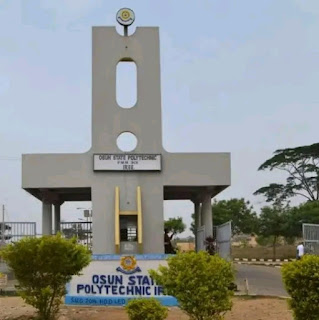
FEATURE: Sex for Grades, Cash for Pass: The Silent Epidemic Tainting Our Polytechnic Halls

Image
 By Victor Olubiye In the quiet corridors of our polytechnic classrooms, a dangerous game unfolds—one not found in any curriculum or course outline. It's whispered in the hostels, sighed in frustration during late-night group discussions, and hidden beneath layers of fear and shame. It is the ugly, persistent practice of sex for grades and money for marks—a cancer slowly eating away at the integrity of our academic institutions. As a campus journalist, I've come across more than enough unsettling reports—some anonymous, some from brave voices—highlighting how some lecturers prey on students for personal gain. What used to be isolated stories shared in hushed tones among students have now become a pattern, a disturbing culture that thrives in silence and impunity. For many female students, academic interactions with certain lecturers have become a traumatic power play. A lecturer, rather than evaluating knowledge, positions himself as a predator, turning grades into a bargaining...

PROFILE: Bandele Omoniyi

Image
 By Victor Olubiye Bandele Omoniyi (1884–1913) was a pioneering Nigerian nationalist, writer, and early advocate for African political representation within the British Empire. Born on November 6, 1884, in Lagos, Nigeria, his parents sold their land to finance his education in Britain. In 1905, he traveled to the UK and enrolled at the University of Edinburgh in 1906 to study law. However, he eventually abandoned his legal studies to engage in political activism and journalism. Omoniyi became deeply involved in anti-imperial journalism, contributing to socialist, Scottish, and Nigerian publications. He corresponded with British politicians, including Prime Minister Henry Campbell-Bannerman and future Labour Party leader Ramsay MacDonald, advocating for African representation in colonial governance. In 1907, he criticized colonial rule through letters published in the Edinburgh Magazine. His most significant work, A Defence of the Ethiopian Movement, was published in 1908 in Edinbur...